






IT'S HOT!... IS IT GOOD FOR THE VINEYARD?
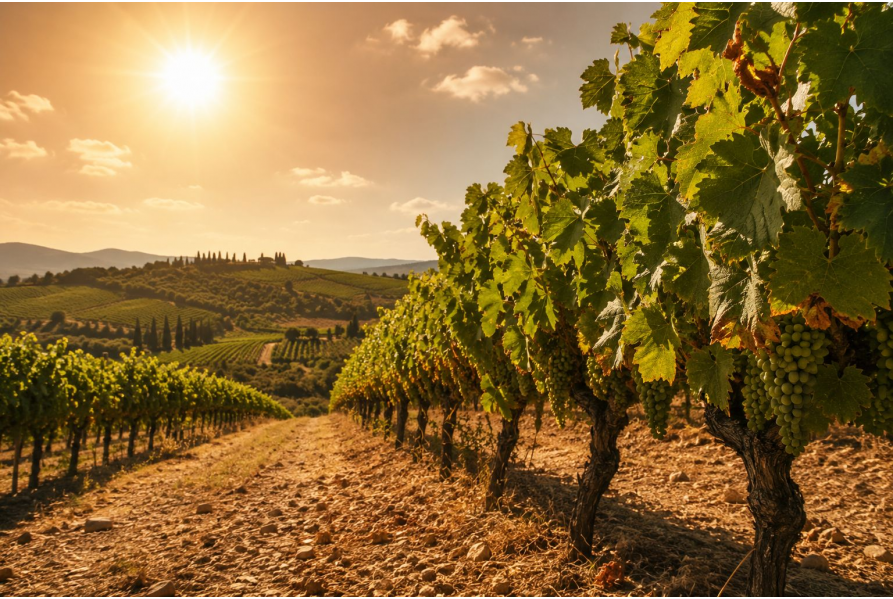
IT'S HOT!... IS IT GOOD FOR THE VINEYARD?
IT'S HOT!... IS IT GOOD FOR THE VINEYARD?
Dog days or heatwave are terms we hear and use frequently every summer. In recent years, however, they seem to arrive earlier and last longer.
But let's put things into perspective. The dog days traditionally refer to the hottest period of the year, usually from mid-July to mid-August. Both our perception and the data show that, due to climate change, this period is becoming increasingly longer and more intense.
A heatwave is a period during which temperatures are exceptionally high for a particular region and time of year. Such events can undoubtedly affect human health, ecosystems and vineyards alike, causing heat and water stress that may alter grape development and ultimately affect grape quality.
Heatwaves can have both positive and negative effects on vineyards, depending on factors such as the intensity of the heat, water availability, soil type and grape variety.
When temperatures are moderately high, sugar accumulation in the grapes is enhanced, increasing their potential alcohol content. Lower humidity also reduces the incidence of diseases such as downy mildew and Botrytis, while warm conditions help speed up ripening when the growing season has been delayed.
But what happens when the heat becomes extreme?
One of the first consequences of prolonged periods of intense heat is water stress. When temperatures exceed 35–38°C (95–100°F) and soil moisture is low, the vine closes its stomata to reduce water loss. As a result, photosynthesis slows down and grape ripening is delayed. At that point, the vine's priority is no longer to ripen the fruit but simply to survive.
Grape clusters and berries exposed directly to the sun may suffer from sunburn, brown spots, dehydration, shrivelling and a loss of aromatic quality.
When temperatures remain above 35°C for several hours, anthocyanin synthesis is reduced, affecting the colour of red grape varieties. Some aromatic compounds also decline, and the balance between sugar accumulation and phenolic ripeness may be disrupted. The result is wines with higher alcohol content, less colour and lower aromatic complexity.
Prolonged exposure to high temperatures also causes the grapes to lose water, concentrating sugars, acids and tannins.
Adapting to a changing climate
Fighting the elements was impossible even in the days of King Philip II and the Spanish Armada, when simply talking about climate change would have been unthinkable. In that respect, nature still has the upper hand. As in many other areas, however, the best solutions often lie in returning to sound traditional vineyard practices:
- Maintain sufficient leaf canopy to shade the grape clusters.
- Avoid excessive leaf removal on the sunniest side of the vines.
- Where permitted, use supplementary irrigation and maintain cover crops to improve soil moisture retention.
- Select grape varieties and rootstocks that are more drought-tolerant and better adapted to local conditions.
Climate change is here to stay, and we are already late in reversing its effects. The only realistic option now is to adapt while continuing efforts to mitigate its impact.
As a consequence, harvests are becoming increasingly earlier, grapes are reaching higher sugar concentrations and wines are showing higher alcohol levels. The risks of dehydration and sunburn are increasing, prompting growers to adapt vineyards by planting more resilient varieties and, in some cases, establishing vineyards at higher, cooler elevations or in more northerly wine-growing regions.